
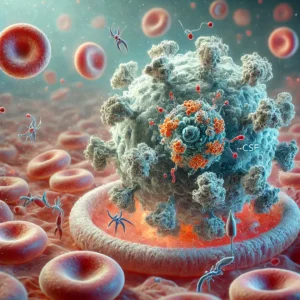
Molgramostim is a recombinant form of Granulocyte-Macrophage Colony-Stimulating Factor (GM-CSF), a glycoprotein critical for the immune system’s ability to stimulate and differentiate precursor cells into mature granulocytes and macrophages. This protein plays a pivotal role in immune response, enhancing the function of white blood cells (leukocytes) and is frequently used in therapeutic settings for conditions requiring immune system support, such as after chemotherapy or in immune deficiency syndromes. Recombinant human GM-CSF, like Molgramostim, has broad clinical applications in cancer therapy, infectious disease treatment, and immune response enhancement.
Structure and Function of GM-CSF
GM-CSF acts on hematopoietic precursor cells in the bone marrow, stimulating the production of neutrophils, eosinophils, and monocytes, which are essential to immune defense mechanisms (NIH). The biological action of GM-CSF is mediated through its interaction with the GM-CSF receptor, a protein complex on the target cell surfaces. Molgramostim, as a recombinant form, mirrors the natural GM-CSF by binding to these receptors, thus promoting immune cell proliferation and maturation (NCBI).
Clinical Applications of Molgramostim
Cancer Immunotherapy
Molgramostim has a prominent role in cancer immunotherapy. It is used to stimulate the immune system in patients undergoing treatments like chemotherapy, which weakens immune responses. GM-CSF helps boost white blood cell recovery, minimizing infection risk and improving immune surveillance against cancer cells (NCI) (PubMed).
Pulmonary Alveolar Proteinosis (PAP)
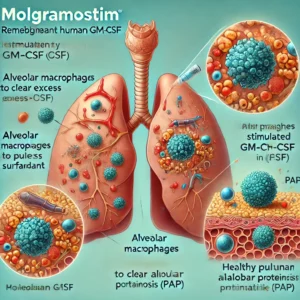
Molgramostim is a key treatment for Pulmonary Alveolar Proteinosis (PAP), a rare lung disease in which surfactant builds up in the lungs, impairing gas exchange. When inhaled, Molgramostim helps alveolar macrophages clear the excess surfactant and restore proper lung function (NHLBI) (NIH).
Stem Cell Mobilization
In the context of stem cell transplants, particularly autologous transplants, Molgramostim is used to mobilize hematopoietic stem cells from bone marrow into the bloodstream, which aids in collecting enough cells for successful transplantation (NCBI).
Chronic Infections and Immunodeficiencies
Patients with chronic infections or immunodeficiencies often benefit from Molgramostim, which boosts immune responses by increasing the number of functional leukocytes. This application has been especially valuable in immunocompromised patients, such as those with HIV or undergoing treatments that suppress the immune system (CDC) (NIH).
Wound Healing and Tissue Regeneration
GM-CSF is also explored in wound healing and tissue regeneration studies. Molgramostim stimulates macrophages and other immune cells to remove damaged tissue and promote regeneration, making it useful in chronic wound therapies (NIH).
Mechanism of Action
Molgramostim acts by binding to GM-CSF receptors on the surface of immune cells, activating intracellular signaling pathways like JAK/STAT, PI3K, and MAPK. These pathways lead to the proliferation and differentiation of myeloid cells, enhancing their ability to respond to infections, clear cellular debris, and assist in tissue repair (NCI).
Dosage and Administration
Molgramostim can be administered via subcutaneous injection or inhalation, depending on the condition being treated. For example, in cancer patients, Molgramostim is administered post-chemotherapy to reduce neutropenia, whereas in patients with PAP, it is inhaled to directly target the alveoli (FDA).
Side Effects and Safety
Like many biologic therapies, Molgramostim may cause side effects such as injection site reactions, fever, and fatigue. More severe side effects, such as capillary leak syndrome or allergic reactions, are rare but require immediate medical attention (CDC) (NIH).
Current and Future Research
Research continues to explore Molgramostim’s broader applications, including its use in combination therapies for cancer, autoimmune diseases, and chronic inflammatory conditions. The role of GM-CSF in stimulating immune responses opens up new possibilities for enhancing vaccine efficacy and developing therapies for autoimmune conditions like rheumatoid arthritis and multiple sclerosis (NIH) (NIAID).
In the future, Molgramostim may also be incorporated into regenerative medicine for tissue repair and recovery following surgeries or injuries, further broadening its therapeutic applications (NHLBI).
Molgramostim, a recombinant form of human GM-CSF, has vast applications in modern medicine. Its ability to stimulate the production and activation of immune cells has proven invaluable in cancer treatment, immune deficiencies, and rare lung diseases like PAP. As research advances, the potential of Molgramostim in new therapeutic areas continues to expand, making it a cornerstone of immunological and regenerative medicine.
For more information, explore these trusted sources:
Centers for Disease Control and Prevention
National Heart, Lung, and Blood Institute
National Institute of Allergy and Infectious Diseases
These hyperlinks will direct you to authoritative and detailed resources for further reading on Molgramostim and its various medical applications.